 AbdulSalam
Hello and Welcome to the discussion portal of positive Psychology, where we are going to study “Mindfulness”
Your life is a dish that is still acceptable to you & many people around you. In this blog, you are going to learn about those seven ingredients that will add an unbelievable amount of value to your life.
It’s up to you, how many you can add, and how you can make the dish of your life taste way better than it is today. So, fasten your seatbelts for the next 10 minutes, as this blog will be bit brief about the ingredients of mindfulness. Lets start quickly.
1-Non-Judgmental (1st Ingredient of Mindfulness)
Modern days humans are more judgmental than our forefathers. They learn about something & issue their judgment right away without going into in-depth analysis. This judgmental behavior makes us biased about many things in our lives, resulting in unwanted negative thoughts about that particular thing.
We judge people, religions, countries, and schools of thought & label them as positive-negative, good, bad, truth or lie, philosophy or irrationality & the list goes on. The only thing Mindfulness make us understand is that “You are not the only right person.”
We judge based on our perceptions & our perceptions come from our learnings. When we start believing that whatever we have learned is the only truth, we will be biased. Accept everything you come across, go beyond the way to understand but not to judge, stop yourself from labeling negative, instead accept them to be different. We all are different & we have to understand this.
2- Beginner’s Mind (2nd Ingredient of Mindfulness)
I have been linked to the public speaking world for the past 6 years & when I was new to public speaking, I learned a technique that might be new to you. If you are addressing people who are more educated, skilled & mature than you, you must bring them to a beginner’s level.
Otherwise, they won’t learn from you. This is called Zero Line Theory & to execute that; trainers & coaches tell their more capable audience something that they don’t know. Let me give you, my example. When I was doing my masters in psychology, I got an opportunity to be in the training program of university faculty members. To apply the zero-line theory, I discussed with them the books (I was good at book reading & they were not), movies that were relevant to the topic of discussion & other few things where I had a more substantial side & when we proceeded after the initial discussion, I addressed them like Donald Trump & they listened like an introvert kindergarten student.
The purpose of sharing this story is to tell you how vital “A Beginner Mind” is. If you start thinking of yourself as the best, you won’t excel anymore. If you say this failure was the ultimate, you won’t stand up again. You have to think like a beginner who has the patience to reach the goal, passion for sticking to it, dreams to keep him motivated & failures to learn from.
Always remember, a beginner’s mind is the epicenter of required thoughts & emotions that you always need to be happier & fulfilling. Your mental state will help you in being more than what you can.
3-Patience (3rd Ingredient of Mindfulness)
Patience is an antidote to many complex emotions. To learn patience, you have to understand that your downfall is not the end; it’s just a matter of time before you will have the opportunity to grab & grow again. Just take your hard time as your test for your reward & your patience will be your strongest ally in this game.
4-Trust:(4th Ingredient of Mindfulness)
Trust is the component we lack most. We don’t trust people, but we also don’t trust ourselves. We don’t trust our capabilities & neither we learned to do that. Did we?
So, when are you going to do that?
- When are you going to focus on your weakness & work on them?
- When are you going to boost your self-confidence?
- When will you learn to trust the right people?
Trust is what strengthens our bridge with ourselves & the people around us. In the outer world, we strengthen this bridge by helping people, communicating effectively & valuing their existence. However, in our inner world, we can do this by building ourselves through our self-actualization (the last section will be about this). Once we start knowing ourselves truly, we start gaining trust in our abilities leading us to the peeks of achievements.
5-Acceptance: (5th Ingredient of Mindfulness)
In our lives, we experience many things that we love & when that happens. We pay gratitude, blush & enjoy those moments but when things don’t go as planned, we feel down, try to avoid & become a victim of circumstances.
Like anyone else out there, you will have some tough times in your lives; you will have to do so many things that you not only don’t like but also hate but have to do. Let me give you an everyday example, you don’t like your job. You will find yourself uncomfortable from every morning Monday till the weekend. Just ask yourself to rate the following out of 10.
- What is your productivity level?
- How much do you love what you do?
- How comfortable are you in these 40-50 hours a week?
Unlike many others, I don’t claim that acceptance will dramatically change your life by 180 degrees. I will say it will improve it. I also had tough times with my job, but acceptance led me through it with pride & productivity. Here is how you can do it too.
Just imagine whatever you face in your life that is quite uncomfortable for you.
- Think about How last it will fix it long?
- Ask yourself about the possibility of improvement in circumstances.
- Take that thing as a challenge.
- Challenge yourself in that particular situation to be happy.
- Find things that are relevant to your work & you also love doing them.
- Do things often that you love most.
- Ask yourself, “How can you make your job environment better.”
- How Much are you exaggerating your reality? (Most Important)
This may not work for all of you, but it did for me. I absorbed & accepted many uncomfortable things that I was bound to do by positively writing about those things. It’s true that when we are not comfortable with something, we become biased about it & we consciously add a topping of exaggeration.
Learn to be down to earth & a super Hero at the same time, so you can accept & overcome any difficult thing & remember “This Shall Pass too.”
6-Letting Go (6th Ingredient of Mindfulness)
When I was learning about this particular thing, I reflected on many of my personal experiences & passive learnings about it. The Concept of letting go demands to let your thoughts & emotions come & go, but I always questioned, “how can we let our negative thoughts just go away?” For example, how will you let that pass through yourself if you are angry at something or someone? This question led me to some amazing conclusions which I will discuss with you.
Letting go (emotions & thoughts) is less about the positive part and more about the opposite part. When you are angry, sad, or anything which is not comfortable for you. There are two possibilities right away.
- You can’t do anything about it.
- You can do something about it.
In both cases, you have a choice of letting go & this choice comes from empathy. Let me tell you something different.
You were working in your workplace. Your boss came to your cabin, aggressively asked you about the progress of the project & shouted at you. What will you feel? Wrong, of course, but when you look at this scenario from a different angle, you may find this situation easy to let go of.
- Possibly, your boss had a tough time with his wife in the morning,
- Possibly, he got a speeding ticket while coming office.
- Possibly one of his children is sick.
- Possibly, he had a difficult time convincing the investors.
Whenever someone shouts at me, instead of just reacting, I let the challenging emotions come & soon their graph starts declining, I think empathically about the person & soon I conclude that his emotions are due to something that happened bad with him & I became the source of easing him by being a source of catharsis. I feel good knowing that & sometimes I just let go of everything by saying, “This harmful idiot is nurtured this way” & I feel good saying that.
7-Non-Striving (7th Ingredient of Mindfulness)
I had a hard time learning this concept of non-striving. I am an ISTJ & just like 15 other personality types (as per MBTI); I always used to make goals, prepare a checklist, do the tasks & repeat the process. When nonstriving taught me the concept of “Not thinking about the outcomes,” I got confused.
Unlike the striving approach in which we make goals & achieve them to be successful, mindfulness asks us to be in the moment & do things that are right & to be done. It teaches us not to create too many expectations.
Nonstriving practice enables us to be open to new experiences, give us time to take a deep look at what we are doing & gains inspiration from multiple subjects. What is it teaching us? It is asking us to trust the process and ourselves & believe that we will reach somewhere if we keep doing the right things today while enjoying the flow state.
One keynote thing about the non-striving practice is that it doesn’t indulge us fully in future success but rather enables us to collect the joys of small steps toward it today. So, no striving is all about being in the moment, taking small steps, making fewer expectations & doing as much as possible while enjoying life. That’s it; that’s the seventh Ingredient of mindfulness.
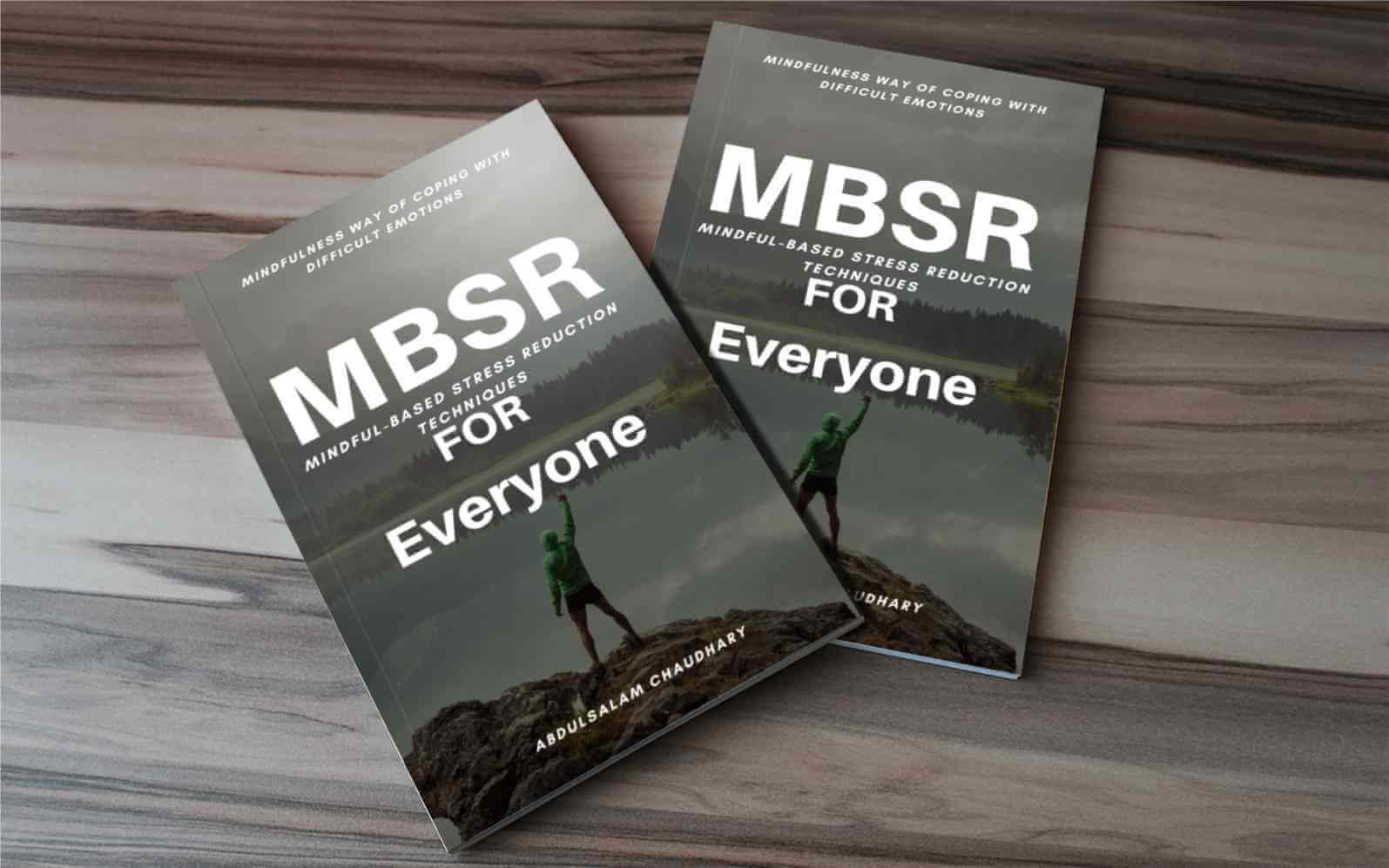
(A chapter from MBSR For Everyone )
Get your Copy from Amazon
Read My Books on Positive Psychology and Enroll In FREE Courses